Be yourself; Everyone else is already taken.
— Oscar Wilde.
This is the first post on my new blog. I’m just getting this new blog going, so stay tuned for more. Subscribe below to get notified when I post new updates.
Be yourself; Everyone else is already taken.
— Oscar Wilde.
This is the first post on my new blog. I’m just getting this new blog going, so stay tuned for more. Subscribe below to get notified when I post new updates.
The event I attend was an event that was held by 2 student led groups on campus, the event was all about what it is like to be black at HPU. The event started out with a short documentary that shared the stories and opinions of students and professors at high point that are black. After the documentary there was a panel of people from the documentary but also other students where they also answered more questions about their experiences at the school. Something about this event that I thought was interesting was the fact that they made a documentary to share their stories in a different perspective. I expected to see a panel which is something that I think is a great way to get opinions out but also allow questions and opinions from the audience. I liked the documentary because they were able to get their stories out without being interrupted, all the audience could do was watch and listen. I was really nice to hear the experiences of minorities on campus, because while I am not black, I am Hispanic and there are even less of us on campus, so it was kind of nice to hear that other people feel the same way as you do and that brings a feeling of comfort and support whether you know the people or not. It was interesting because I feel like we haven’t talked about race very much yet in class, but because we talk about culture and intersectionality race for sure plays into that. Something that the students spoke about in the documentary is that the culture of HPU has created a stigma for what it means to be black on campus even though they are like everyone else. The students at HPU has basically created a single story for the minorities on campus and the minority can see that and want to change that perception of themselves. A lot of the literature we have read in class have been about how women keep having these single stories placed on them and they don’t go unseen, we know they exist and want to change them; and I think this goes the same for the minorities on campus. Overall, my big take away from this event is that everyone’s experience on campus is going to be different and any and all minority shouldn’t be discouraged by the stigma/single story the majority created and instead find support from people who may be experiencing the same thing on campus and create our own story. I think it was really important that they brought to light their experiences on campus because there is probably more people on campus who feel the same way.
Something that has really intrigued me throughout the semester is how much culture plays into how one can perceive feminism. For example, here in the US we have created a culture and society that allows us to actively make changes to our lives as females. While yes, we have made a lot of progress toward our equal treatment, we expect every other country around the world to do the same. However, I think that it isn’t our place to expect that of them and why are we the ones to set the bar? To them they may not feel they are being oppressed because to them they aren’t, it’s the way it always has been, and they are okay with that, but there are also more than one side to a story. Those same women who don’t want to change also are surrounded by women who do want change and seek a freer life. We have seen examples of this in two ways, literature; with Under the Udala Trees and The Treatment of Bibi Haldar and in the documentary with The World Before Her. These both show how much culture can make an impact on how women choose and expect to live their lives.
In Under the Udala Trees, the main character really struggles not only with her sexuality but her identity. She craves to be loved and love how/who she wants but is in a constant battle with her mother who is extremely old fashion and insists that she has to live her life a certain way. A way that the society expects her to live, which would be considered normal. The normal or the ordinary is what I think is important to think about here. How each of them envision normal was very different, Ijeoma didn’t think she was weird to feel the way she did and later learned that she isn’t weird she just loves the opposite sex and that that doesn’t make her unordinary or crazy.(Okparanta,2016) I think the idea of being out of the ordinary is portrayed through the story about Bibi. While all the story says is that she is sick. We never really know if she is medically sick. My theory is that she just does not fit the society’s view of attractive. Since she isn’t not viewed as “attractive” and “marry-able” she is automatically shut out by the society.(Lahiri,161) But how does the culture define one’s idea of beauty? Americans idea beauty is much different than how India may view beauty. And to some, portraying western beauty can almost seem offensive like how some people viewed the pageant girls from the documentary.
The documentary made some very interesting yet contradicting points, which definitely depended on the side of the story. At one point one of the pageant girls says that they are obsessed with “whitening” their skin, yet some family’s find that pageants are too western and are ruining Indian culture. But does this one again sparks he question on how does each generation view their culture? Yes, the pageant girls like the idea of doing something for themselves but they are also not comfortable wearing a bikini which shows that they still want to have some of the original traditions and views that the older generations have. The girls who are training for the Hindu regime? Those girls are the ones that interested me the most, because all though they are very passionate about their religions and the culture that comes with it, they are still young girls who have some admiration for the women in pageantry. I find this interesting because they are extremely okay with the idea of living to get married and reproduce, but that doesn’t stop them from thinking about the what ifs. These girls experience so much from surviving their birth just because they are girls to later being married off, and this makes me question at what point in their life does their value change? And why do they carry so much value when it comes to reproducing yet hold very little value in the aspect of respect and getting to live an independent life. Is this something created by culture and how does this change based on the society/culture someone is in?
Our culture makes up a lot of our identity, how we view the world, and how we treat people. I think it is important to discuss culture within the class because while we may all be from the states, I think even culture changes based on state and how we each grew up. I think being able to see other people points of views and ideas on culture can be beneficial to opening up someone mind to understanding other people and their lives. This is important I think about with the class because as we continue to learn about more cultures as we read and watch more things, we will be able to see how a society’s culture plays a role in someone’s story.
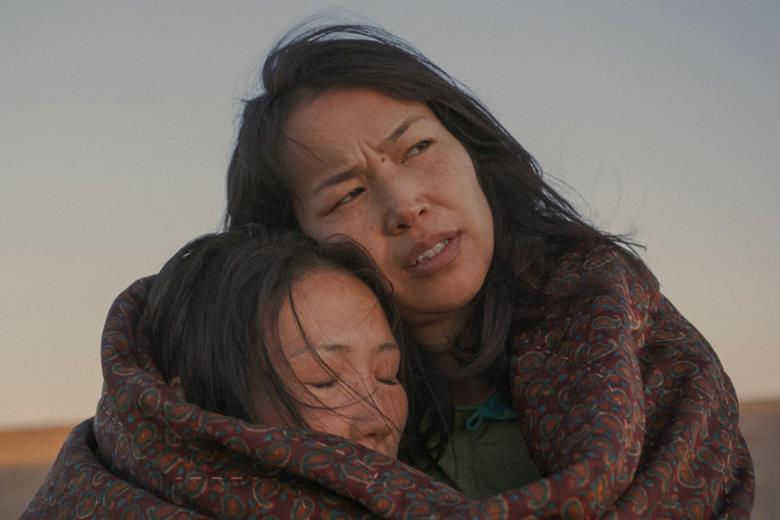
I found this really cool article about a film that was recently released in Germany at a film festival and its about 2 sisters, one who was exiled but is now back to learn more about her culture, but she runs into conflicts with her sister because they see their lives very differently and I think that this is super similar to under the udala trees because of the relationship that Ijeoma has with her mom and how they see the world. But also I think this movie would be interesting to see because the western world would definitely has something to say about the way feminism seems to be portrayed in the movie based on the article.
Right when I thought that the book was going to start lead to the ending with not much else happening I learned I was extremely wrong. Parts 5 and 6 of the book were just as interesting as the previous parts, if not I think they were even better. It was a bit of an emotional rollercoaster for me because when she meets Ndidi I thought that she was going to finally get accepted but her mom at least but instead the exact opposite happened, I didn’t not expect Ndidi to encourage her to marry a man, but I think that showed how much she cared for Ijeoma, she wanted her to live a safe life. But that didn’t really happen either because her husband ended up being verbally and physically abusive. I think Ijeomas confidence in her self grows a lot, obviously enough for her to leave her husband which I think shows a lot about the evolution of her personality. In the epilogue I was glad to see that she was back with Ndidi and that her daughter could care less about her sexuality I think shows that maybe change could happen eventually as generations pass. I do wish that we could be told if her mom ever changes her mindset about her daughter, I think that would have been awesome to see happen.
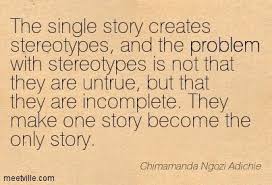
This has begun to be one of my favorite quotes. Ive heard it many times in different classes, but it being something that I personally relate too it is so great to see something that I experience put into words provides a feeling of being understood. I also think that this is something that most people can relate to but don’t realize that they are experiencing. Stereotypes contain some truth but how do we keep it from being the only truth?
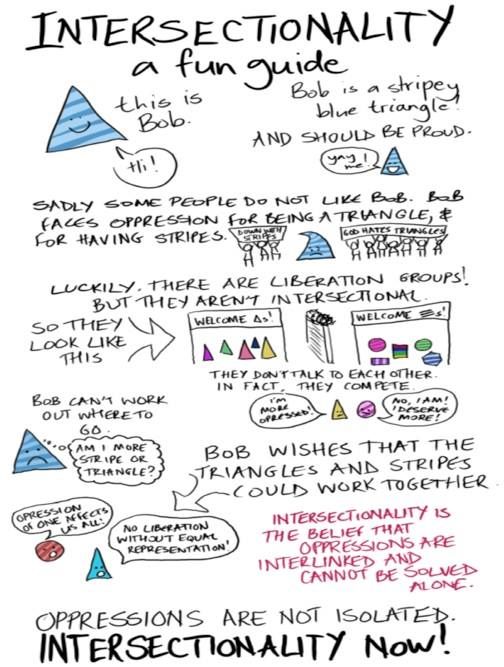
Intersectionality has been one of my favorite things to learn and talk about. It was something that we had talked about a lot in a different class, and I’m excited to be able to translate that information to this class and see how it appears in the novels that we read and relate that back to my life and how different oppressions affect me personally.
The simplicity of this quote I think allows it to say more that the words it self. It allows for open interpretation but at the same time makes a point. Being able to control my own body as a women has taken many years to get too and even now we still have some battles to get through, but a lot of progress has been made and i think that is something that we as women should be proud of but also allow it to be a fire under us to keep on fighting for complete control of our minds, body, and lives.
This is an example post, originally published as part of Blogging University. Enroll in one of our ten programs, and start your blog right.
You’re going to publish a post today. Don’t worry about how your blog looks. Don’t worry if you haven’t given it a name yet, or you’re feeling overwhelmed. Just click the “New Post” button, and tell us why you’re here.
Why do this?
The post can be short or long, a personal intro to your life or a bloggy mission statement, a manifesto for the future or a simple outline of your the types of things you hope to publish.
To help you get started, here are a few questions:
You’re not locked into any of this; one of the wonderful things about blogs is how they constantly evolve as we learn, grow, and interact with one another — but it’s good to know where and why you started, and articulating your goals may just give you a few other post ideas.
Can’t think how to get started? Just write the first thing that pops into your head. Anne Lamott, author of a book on writing we love, says that you need to give yourself permission to write a “crappy first draft”. Anne makes a great point — just start writing, and worry about editing it later.
When you’re ready to publish, give your post three to five tags that describe your blog’s focus — writing, photography, fiction, parenting, food, cars, movies, sports, whatever. These tags will help others who care about your topics find you in the Reader. Make sure one of the tags is “zerotohero,” so other new bloggers can find you, too.
Have a WordPress.com account? Log in now.

